
Book Recommendations
Dog-eared favorites that fuel my practice and shape my work
A marketing playbook that clarifies your brand message by casting the customer as the hero and your business as the guide. Miller’s StoryBrand framework helps you craft websites, one-liners, and sales funnels that drive engagement and sales.
A classic, no‑nonsense guide to writing copy that sells across print and digital channels. Bly covers headlines, benefits vs. features, offers, structure, testing, and SEO‑era tactics, with formulas, checklists, and examples to boost response.
A classic exploration of the psychology of persuasion, distilling the six universal principles and how they shape decisions. Cialdini explains how to recognize and ethically apply these levers in marketing, sales, and everyday influence.
Uncovers the subtle social forces that quietly shape our choices, from the products we buy to the people we follow. Drawing on research and vivid examples, Berger shows how mimicry, conformity, and differentiation drive behavior and how to recognize and harness these dynamics,
A meditative guide to cultivating creativity as a daily practice: sharpening awareness, presence, and taste to unlock original work. Drawing on decades of producing artists across genres, Rubin offers simple principles and prompts to quiet noise, trust intuition, and make more resonant art and life.
A compact collection of copywriting micro-lessons on crafting hooks, leads, and calls to action that get read and drive response. Shleyner distills proven techniques into quick prompts and examples for emails, landing pages, and ads.

A playbook for uncovering, prioritizing, and communicating the benefits customers value most. Weiss and MacInnis provide research approaches and frameworks to align around functional and emotional benefits that differentiate a brand.
A practical guide to creating change by removing roadblocks rather than pushing harder. Berger’s R.E.D.U.C.E. framework offers tactics to give people agency, highlight the cost of inaction, shrink the ask, reduce risk, and use peer proof to move minds.
A practical field guide to crafting clear, useful, audience-first content across digital channels. Handley pairs voice and style principles with actionable tactics and examples to help you write sharper copy for websites, emails, and beyond.

Translates Joseph Campbell’s monomyth into a practical roadmap, detailing archetypes and the Hero’s Journey to shape compelling narratives. Vogler pairs mythic principles with clear tools for building characters, stakes, and transformative arcs across different narrative frameworks.
A practical guide to building people-first, inclusive content that delivers measurable results. Virji outlines strategies for audience research, creation, repurposing, distribution, and measurement, backed by templates and real-world examples.
A candid guide to building a brand people love by grounding every decision in customer insight and a clear purpose. Heyward offers frameworks and case studies on positioning, naming, visual identity, voice, and product experience.
A science-backed guide to choosing words that change what people think, feel, and do. Berger shows how small linguistic shifts can boost persuasion, deepen connection, and spur action across sales and everyday communication.
The Story Solution presents a practical blueprint for writers built around sequences that keep protagonists active and stories propulsive. Edson turns theory into actionable beats to build stakes, deepen character, and deliver emotionally satisfying narratives.
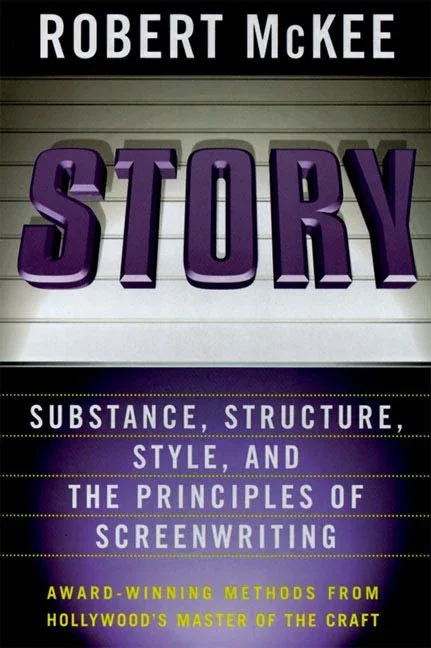
A masterclass in the craft of storytelling, distilling clear principles of structure, character, and conflict to help writers build compelling narratives. McKee rejects formula in favor of fundamentals, offering tools to create emotionally resonant stories.

“People don't think in terms of information. They think in terms of narratives. But while people focus on the story itself, information comes along for the ride.”
Jonah berger“Pretty websites don’t sell things. Words sell things.”
Donald Miller“If you can remove words and still say the same thing, the writing is better every time.”
Eddie Shleyner